
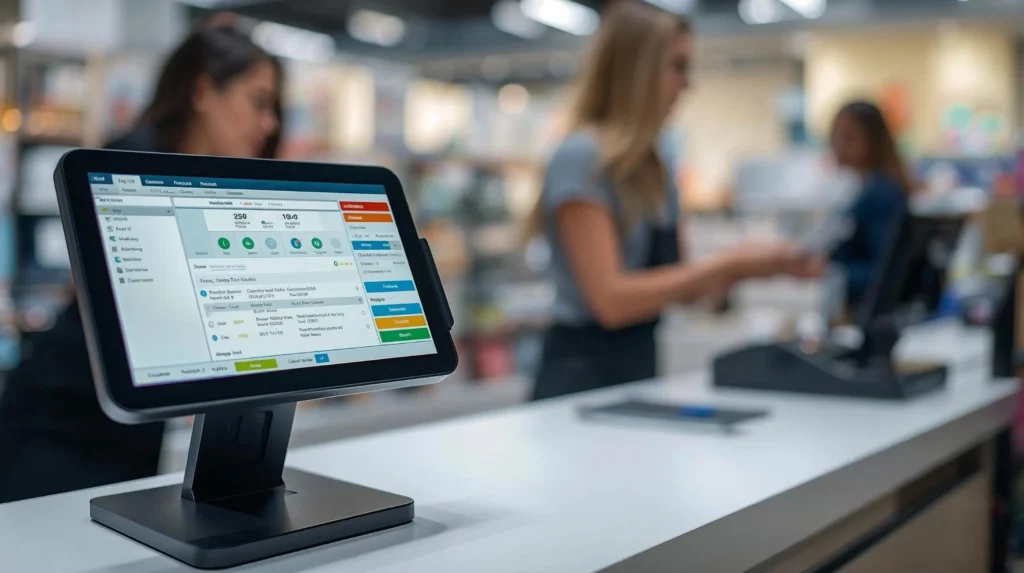
If you operate more than one store or plan to expand – managing operations becomes exponentially harder.
Inventory must stay synchronized.
Sales data must be centralized.
Staff must follow the same processes.
Without the right system, retail businesses quickly end up juggling spreadsheets, disconnected software, and inconsistent reporting.
This is where a multi-location POS system becomes essential.
A modern POS system allows retailers to manage sales, inventory, customers, and reporting across multiple stores from one centralized platform, making it easier to scale operations and maintain consistency.
In this guide, we’ll explain:
- What a multi-location POS system is
- Why growing retailers need one
- Key features to look for
- How it helps businesses scale from one store to many
What Is a Multi-Location POS System?
A multi-location POS system is a centralized platform that connects all your store locations into one operational dashboard.
Instead of running separate systems for each store, a multi-store POS allows businesses to:
- Track inventory across locations
- Monitor sales performance in real time
- Manage staff permissions
- Standardize pricing and promotions
- Access reports from anywhere
As businesses grow, a cloud-based POS allows owners to monitor inventory, customer activity, and sales across locations in real time without manual updates.
Why Retail Businesses Need a Multi-Location POS
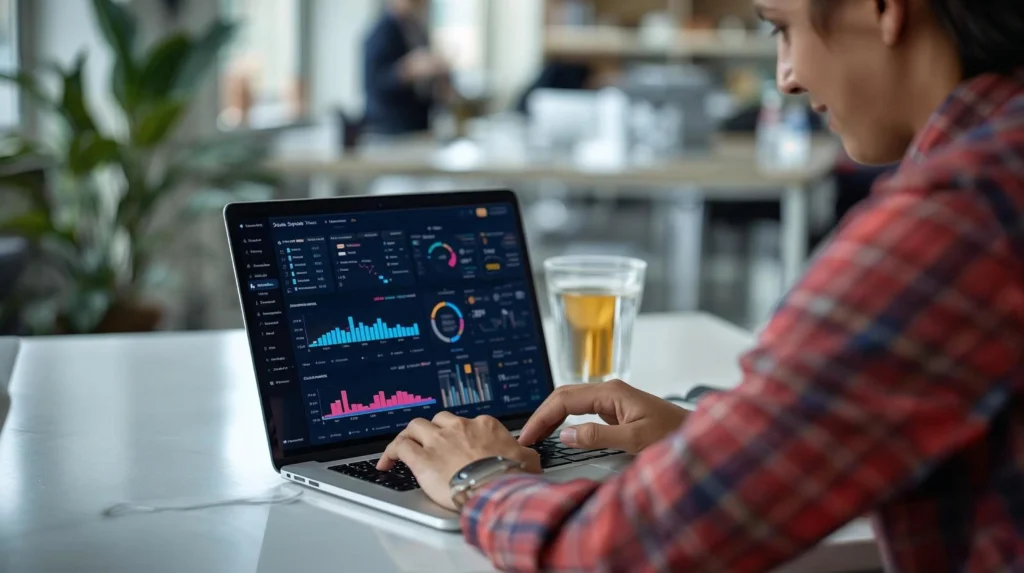
Scaling from one store to several locations introduces new operational challenges.
Without centralized systems, retailers often face:
Inventory inconsistencies
Stock levels vary across stores.
Disconnected reporting
Sales insights are fragmented.
Manual processes
Teams spend hours reconciling data.
Operational inefficiencies
Staff training differs between locations.
A centralized POS helps solve these problems by synchronizing data and operations across every store location.
Key Features to Look for in a Multi-Location POS System
When choosing POS software for multiple store locations, there are several critical capabilities to consider.
1. Centralized Inventory Management
Inventory should automatically update across all stores whenever a sale occurs. This prevents stockouts and ensures customers can find products at any location. Advanced systems can even automate reordering when stock runs low.
2. Real-Time Sales Reporting
Retailers need instant visibility into:
- top performing locations
- best selling products
- revenue trends
Cloud POS platforms provide live dashboards so operators can make smarter decisions quickly.
3. Role-Based User Permissions
Multi-location businesses require strict access control.
Owners should be able to:
- restrict access by role
- manage store-level permissions
- maintain operational security
4. Integrated Customer Profiles
A strong POS system allows businesses to track:
- purchase history
- loyalty program activity
- customer preferences
This data enables targeted marketing and improved retention.
5. Cloud-Based Infrastructure
Cloud POS systems are ideal for multi-store retailers because they allow access to operational data from any location or device.
Benefits include:
- automatic software updates
- remote access
- lower IT costs
Benefits of a Multi-Location POS System
Retailers using centralized POS systems typically see improvements in several areas.
Operational efficiency
Automation reduces manual tasks.
Inventory accuracy
Stock updates instantly across locations.
Better decision-making
Real-time data enables smarter business strategies.
Scalable growth
New stores can be added quickly without rebuilding systems.
How Franpos Helps Multi-Location Businesses Scale
Franpos was built specifically to help retailers manage complex operations across locations.
With Franpos, businesses can:
- manage multiple stores from one dashboard
- automate marketing campaigns
- track customer engagement
- monitor inventory across locations
- generate powerful analytics reports
Most importantly, Franpos connects POS, marketing, payroll, reporting, scheduling, and e-commerce into one platform, eliminating the need for multiple disconnected tools.
Final Thoughts
Scaling a retail business is challenging – but the right POS system can make it significantly easier.
A multi-location POS system provides the operational backbone required to manage inventory, analyze performance, and maintain consistency across every store.
If you’re planning to grow from one store to several, choosing the right POS platform early can save thousands of hours in operational complexity.
If you’re exploring POS systems for your growing business, it may be time to see what a unified platform can do.
Book a demo with Franpos and see how multi-location retail can run from one centralized system.
